
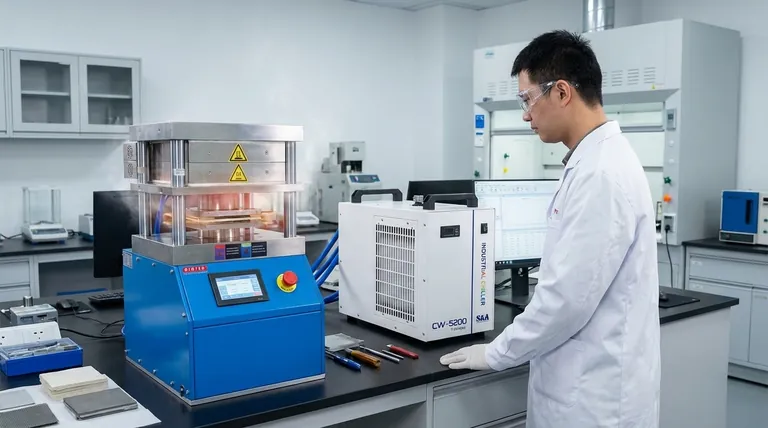
Una pressa idraulica con capacità di riscaldamento è lo strumento abilitante fondamentale per superare l'elevata resistenza interfacciale intrinseca nell'assemblaggio di batterie allo stato solido. Il suo ruolo principale è quello di applicare combinazioni specifiche di calore e forza meccanica per unire l'anodo di litio metallico con l'elettrolita ceramico LLZO, garantendo che agiscano come un sistema elettrochimico unificato.
La pressa funziona come uno strumento di incollaggio che sfrutta le proprietà di "creep" del litio; ammorbidendo il metallo con il calore e spingendolo nelle irregolarità superficiali della ceramica con la pressione, elimina i vuoti microscopici che altrimenti bloccano il trasporto ionico.
La Sfida Ingegneristica: L'Interfaccia Solido-Solido
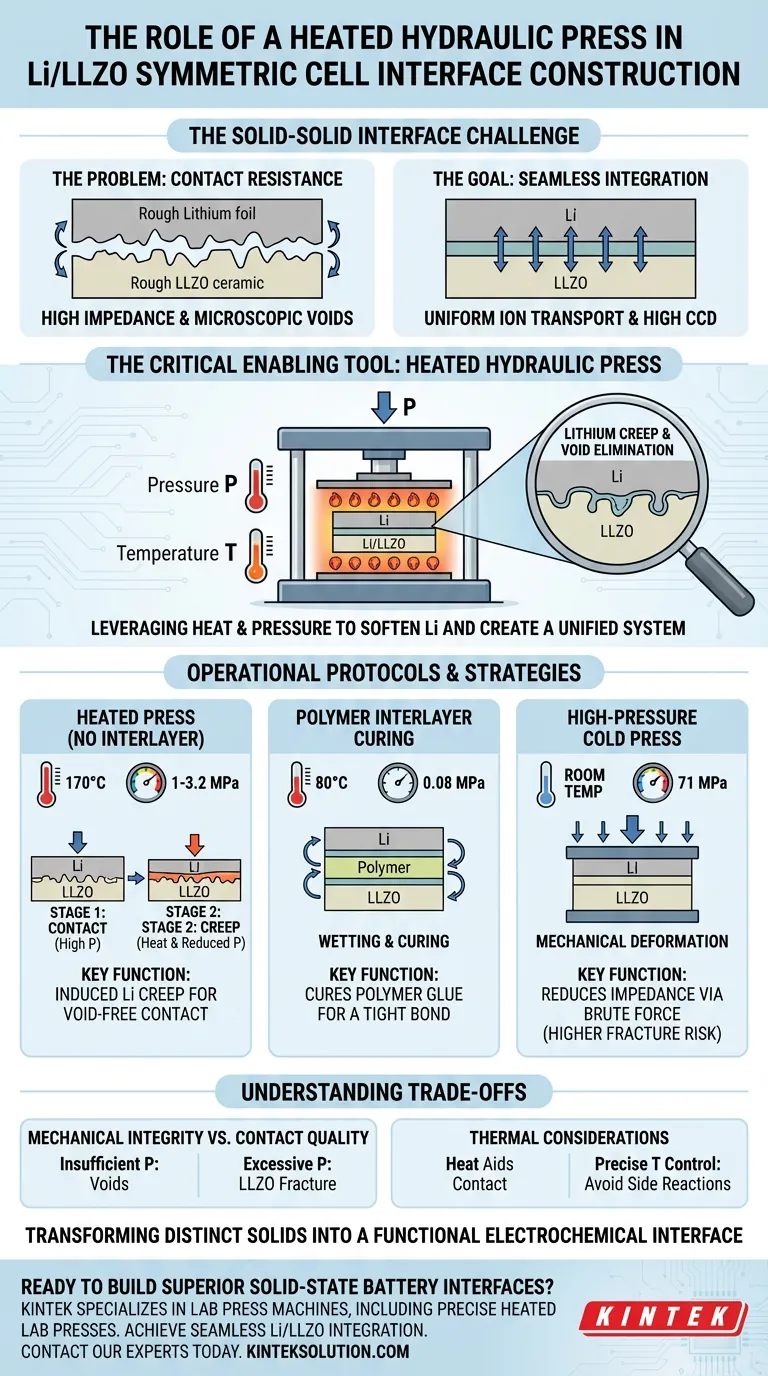
Il Problema del Contatto
A differenza degli elettroliti liquidi che bagnano naturalmente le superfici degli elettrodi, i pellet ceramici LLZO solidi presentano rugosità microscopiche. Semplicemente posizionando un foglio di litio sopra si ottiene uno scarso contatto fisico e un'elevata impedenza interfacciale a causa degli spazi d'aria.
Il Ruolo del Creep del Litio
La pressa riscaldata risolve questo problema aumentando la temperatura (ad esempio, a 170°C). Ciò induce il creep nel litio metallico, ammorbidendolo efficacemente. Sotto pressione simultanea, il litio ammorbidito fluisce come un fluido viscoso nelle caratteristiche topografiche dell'LLZO.
Ottenere un'Integrazione Senza Interruzioni
Il risultato è un confine senza interruzioni e privo di vuoti tra l'anodo e l'elettrolita. Questo contatto intimo è fondamentale per ottenere un trasporto uniforme di ioni di litio e un'elevata densità di corrente critica (CCD).
Protocolli Operativi e Metodologie
Il Processo Riscaldato a Due Stadi
Un protocollo comune prevede un'applicazione precisa in due fasi di forza e temperatura. Innanzitutto, una pressione iniziale elevata (ad esempio, 3,2 MPa) stabilisce il contatto fisico. In secondo luogo, il sistema viene riscaldato (ad esempio, 170°C) sotto pressione ridotta (ad esempio, 1 MPa) per massimizzare la conformità superficiale senza danneggiare la ceramica.
Polimerizzazione dell'Interstrato Polimerico
Quando viene utilizzata una colla polimerica o un interstrato per favorire la bagnatura, la pressa svolge una funzione di polimerizzazione diversa. Qui vengono applicate condizioni più blande, come 80°C a 0,08 MPa. Ciò facilita la corretta bagnatura e polimerizzazione dell'interstrato, garantendo un legame stretto al confine solido-solido.
Assemblaggio a Freddo ad Alta Pressione
In scenari in cui non viene utilizzato il calore, la pressa deve esercitare una forza significativamente maggiore per ottenere risultati simili. I riferimenti indicano pressioni fino a 71 MPa utilizzate per forzare meccanicamente il litio contro l'LLZO. Questo metodo di "forza bruta" si basa interamente sulla deformazione meccanica per ridurre l'impedenza.
Comprendere i Compromessi
Integrità Meccanica vs. Qualità del Contatto
Applicare una pressione insufficiente lascia vuoti, portando a un'elevata resistenza e alla potenziale formazione di dendriti. Tuttavia, una pressione eccessiva (in particolare nella pressatura a freddo) rischia di fratturare il fragile pellet ceramico LLZO. La pressa riscaldata mitiga questo rischio consentendo pressioni inferiori grazie all'ammorbidimento termico del litio.
Considerazioni Termiche
Mentre il calore favorisce il contatto, un controllo preciso della temperatura è vitale. Le temperature devono essere sufficientemente elevate da indurre il creep, ma controllate per prevenire reazioni secondarie indesiderate o fusione, a seconda della chimica specifica della cella e degli interstrati utilizzati.
Fare la Scelta Giusta per il Tuo Obiettivo
Le impostazioni specifiche che utilizzi sulla pressa idraulica dipendono in larga misura dalla tua strategia di assemblaggio.
- Se il tuo obiettivo principale è massimizzare il contatto senza interstrati: utilizza il metodo riscaldato a due stadi (circa 170°C) per sfruttare il creep del litio per un'interfaccia senza interruzioni a pressioni inferiori.
- Se il tuo obiettivo principale è utilizzare agenti bagnanti o interstrati polimerici: riduci la temperatura (circa 80°C) e la pressione (circa 0,08 MPa) per polimerizzare il legame senza deformare fisicamente il materiale sfuso.
- Se il tuo obiettivo principale è evitare stress termici sui componenti: affidati alla pressatura a freddo ad alta pressione (circa 71 MPa), assicurandoti che il pellet ceramico abbia una densità sufficiente per resistere al carico meccanico.
La pressa idraulica non è solo uno strumento di compattazione; è il meccanismo che trasforma due solidi distinti in un'unica interfaccia elettrochimica funzionale.
Tabella Riassuntiva:
| Strategia di Assemblaggio | Temperatura | Pressione | Funzione Chiave |
|---|---|---|---|
| Pressa Riscaldata (Senza Interstrato) | ~170°C | 1-3,2 MPa | Induce il creep del litio per un contatto privo di vuoti |
| Polimerizzazione Interstrato Polimerico | ~80°C | ~0,08 MPa | Polimerizza la colla polimerica per un legame stretto |
| Pressa a Freddo ad Alta Pressione | Temperatura Ambiente | ~71 MPa | Deforma meccanicamente il litio (rischio di frattura maggiore) |
Pronto a costruire interfacce per batterie allo stato solido superiori? KINTEK è specializzata in macchine per presse da laboratorio, comprese presse da laboratorio automatiche, isostatiche e riscaldate progettate per un controllo termomeccanico preciso. Le nostre attrezzature sono ingegnerizzate per soddisfare le rigorose esigenze della ricerca di laboratorio, aiutandoti a ottenere un'integrazione senza interruzioni di Li/LLZO e prestazioni elettrochimiche affidabili. Contatta i nostri esperti oggi stesso per trovare la pressa perfetta per le tue esigenze di assemblaggio di batterie!
Guida Visiva
Prodotti correlati
- Pressa Idraulica Riscaldata con Piastre Riscaldanti per Camera a Vuoto da Laboratorio
- Macchina pressa idraulica riscaldata ad alta temperatura automatica con piastre riscaldate per il laboratorio
- Macchina di stampa idraulica riscaldata con i piatti riscaldati per la stampa calda del laboratorio della scatola di vuoto
- Pressa Idraulica da Laboratorio Riscaldata 24T 30T 60T con Piastre Calde per Laboratorio
- Pressa Idraulica Riscaldata Automatica con Piastre Calde per Laboratorio
Domande frequenti
- Quali sono i requisiti per la pressatura degli elettrodi con liquidi ionici ad alta viscosità come EMIM TFSI? Ottimizzare le prestazioni
- Come una pressa idraulica riscaldata da laboratorio facilita la preparazione del campione PBN per WAXS? Ottenere una diffrazione a raggi X precisa
- Quali sono le applicazioni industriali delle presse idrauliche riscaldate? Padroneggia calore e forza per la produzione di precisione
- Qual è la funzione di una pressa idraulica da laboratorio con piastre riscaldate nelle batterie a stato solido (SSE)? Migliorare la densità e la conducibilità della batteria
- Come vengono utilizzate le presse idrauliche riscaldate nella preparazione di film sottili? Meccanismi chiave e applicazioni



















