
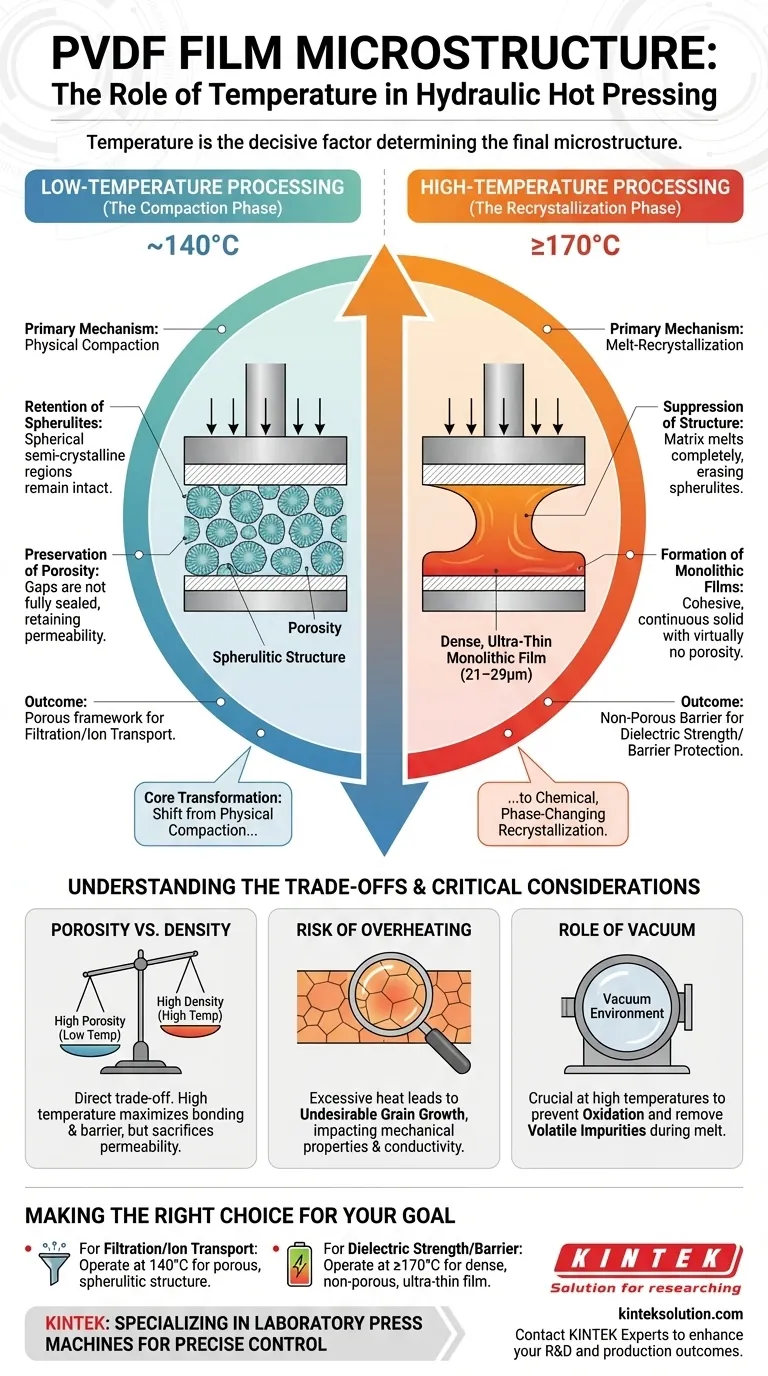
La temperatura è il fattore decisivo nel determinare la microstruttura finale di un film di PVDF durante la pressatura a caldo idraulica.
A temperature più basse (intorno ai 140°C), il processo agisce come un meccanismo di compattazione, preservando la struttura sferulitica originale e mantenendo la porosità. Al contrario, l'aumento della temperatura a 170°C o superiore innesca un processo di ricristallizzazione da fusione, cancellando efficacemente la struttura sferulitica per creare un film monolitico denso e ultrasottile.
La Trasformazione Fondamentale Il passaggio da 140°C a 170°C rappresenta un cambiamento dalla compattazione fisica alla ricristallizzazione chimica che cambia fase. Si sceglie essenzialmente tra una membrana porosa e strutturata e una barriera densa e non porosa attraversando questa soglia termica.
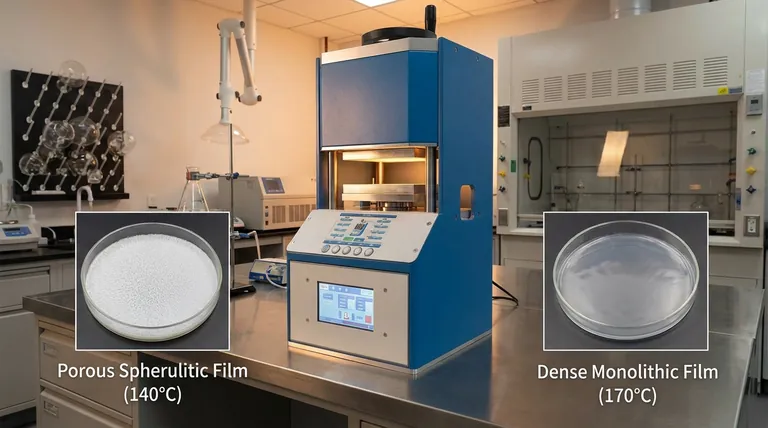
Lavorazione a Bassa Temperatura (La Fase di Compattazione)
Quando si utilizza la pressa a caldo idraulica a temperature più basse, in particolare intorno ai 140°C, si agisce principalmente sulla disposizione fisica del materiale piuttosto che sulla sua fase chimica.
Ritenzione degli Sferuliti
A questa temperatura, l'energia termica è insufficiente per fondere completamente la matrice di PVDF. Di conseguenza, la struttura sferulitica originale, ovvero le regioni sferiche semicristalline, rimane intatta.
Conservazione della Porosità
Poiché il materiale non subisce un flusso di fusione completo, gli spazi tra le strutture non vengono completamente sigillati. L'azione di pressatura compatta il film per aumentarne la densità, ma consente deliberatamente di mantenere un certo grado di porosità.
Legame Meccanico
La pressione facilita il contatto tra le particelle, migliorando la resistenza del legame. Tuttavia, questo legame si basa sulla vicinanza fisica e sulla parziale diffusione piuttosto che su una coalescenza totale della fusione.
Lavorazione ad Alta Temperatura (La Fase di Ricristallizzazione)
L'aumento della temperatura a 170°C e oltre altera fondamentalmente il meccanismo di lavorazione dalla compattazione alla fusione.
Soppressione della Struttura
A queste temperature elevate, la matrice di PVDF si fonde completamente. Questo cambiamento di fase sopprime la formazione della struttura sferulitica che caratterizza i film a temperature più basse.
Formazione di Film Monolitici
Mentre il materiale ricristallizza dalla fusione, forma un solido coeso e continuo. Il risultato è un film monolitico denso con quasi nessuna porosità, poiché il polimero fuso riempie tutti i vuoti disponibili.
Drastica Riduzione dello Spessore
Il passaggio a uno stato di fusione consente alla pressione idraulica di comprimere il materiale in modo molto più efficiente. Ciò si traduce in un profilo ultrasottile, riducendo tipicamente lo spessore del film nell'intervallo di 21-29µm.
Comprendere i Compromessi
Sebbene la pressatura a caldo offra un controllo preciso sulla microstruttura, sulla dimensione dei grani e sulla distribuzione, la scelta della temperatura sbagliata può compromettere la funzione prevista del materiale.
Porosità vs. Densità
Esiste un compromesso diretto tra porosità e densità. Le alte temperature massimizzano la diffusione atomica e la resistenza del legame, creando una barriera robusta, ma ciò avviene a scapito della porosità richiesta per applicazioni come la filtrazione o il trasporto ionico.
Il Rischio di Surriscaldamento
Mentre temperature più elevate generalmente migliorano il legame, il calore eccessivo può portare a una crescita indesiderata dei grani. Ciò può influire negativamente sulle proprietà meccaniche, rendendo il materiale fragile o alterandone la conducibilità termica ed elettrica in modi non previsti.
Il Ruolo del Vuoto
È fondamentale notare che la lavorazione ad alta temperatura è meglio condotta in un ambiente sottovuoto. Ciò previene l'ossidazione che altrimenti indebolirebbe il materiale a questi livelli di calore e garantisce la rimozione delle impurità volatili durante la fase di fusione.
Fare la Scelta Giusta per il Tuo Obiettivo
L'impostazione corretta della temperatura dipende interamente dal fatto che la tua applicazione richieda un quadro permeabile o uno strato dielettrico solido e sottile.
- Se il tuo obiettivo principale è la filtrazione o il trasporto ionico: Operare a 140°C per compattare il film mantenendo la struttura porosa e sferulitica necessaria per la permeabilità.
- Se il tuo obiettivo principale è un'elevata rigidità dielettrica o protezione barriera: Operare a 170°C o superiore per fondere la matrice, creando un film monolitico denso, ultrasottile e non poroso.
Manipolando la temperatura rispetto al punto di fusione del PVDF, si passa dalla semplice modellazione del materiale all'ingegnerizzazione fondamentale della sua architettura interna.
Tabella Riassuntiva:
| Temperatura | Meccanismo Primario | Microstruttura Finale | Risultato Chiave |
|---|---|---|---|
| ~140°C | Compattazione Fisica | Struttura Porosa, Sferulitica | Porosità Mantenuta per Filtrazione/Trasporto Ionico |
| ≥170°C | Ricristallizzazione da Fusione | Film Denso, Monolitico | Barriera Ultrasottile e Non Porosa per Rigidità Dielettrica |
Pronto a Ingegnerizzare la Microstruttura del Tuo Film di PVDF con Precisione?
La scelta della giusta temperatura della pressa a caldo idraulica è fondamentale per ottenere le proprietà desiderate del film, sia per la filtrazione, i separatori di batterie o gli strati dielettrici ad alte prestazioni. KINTEK è specializzata in macchine per presse da laboratorio, tra cui presse automatiche da laboratorio, presse isostatiche e presse da laboratorio riscaldate progettate per un controllo preciso di temperatura e pressione.
Le nostre attrezzature aiutano ricercatori e professionisti di laboratorio come te a produrre costantemente film di PVDF di alta qualità con porosità e densità personalizzate. Contattaci oggi stesso tramite il modulo sottostante per discutere la tua applicazione specifica e scoprire come le nostre affidabili presse da laboratorio possono migliorare i tuoi risultati di ricerca e sviluppo e di produzione.
Contatta Subito gli Esperti KINTEK
Guida Visiva
Prodotti correlati
- Pressa Idraulica Riscaldata con Piastre Riscaldanti per Camera a Vuoto da Laboratorio
- Macchina pressa idraulica riscaldata ad alta temperatura automatica con piastre riscaldate per il laboratorio
- Pressa Idraulica da Laboratorio Riscaldata 24T 30T 60T con Piastre Calde per Laboratorio
- Macchina di stampa idraulica riscaldata con i piatti riscaldati per la stampa calda del laboratorio della scatola di vuoto
- Pressa Idraulica Riscaldata Automatica con Piastre Calde per Laboratorio
Domande frequenti
- Come una pressa idraulica riscaldata da laboratorio facilita la preparazione del campione PBN per WAXS? Ottenere una diffrazione a raggi X precisa
- Quali sono i requisiti per la pressatura degli elettrodi con liquidi ionici ad alta viscosità come EMIM TFSI? Ottimizzare le prestazioni
- Quali sono le applicazioni industriali delle presse idrauliche riscaldate? Padroneggia calore e forza per la produzione di precisione
- Qual è la funzione di una pressa idraulica da laboratorio con piastre riscaldate nelle batterie a stato solido (SSE)? Migliorare la densità e la conducibilità della batteria
- Come vengono utilizzate le presse idrauliche riscaldate nella preparazione di film sottili? Meccanismi chiave e applicazioni



















